Learn How to Read a Map Backpacking

Knowing how to read a map and navigate your way successfully through the backcountry without and then much as a whiff of digital technology is an immensely satisfying experience. However, it takes patience, exercise and attempt to reach a level where you lot're yomping around like an explorer of quondam. And of course, in this 24-hour interval and age, in that location's always the temptation of mod technology.
Yep, modernistic engineering science has surely moved navigation out of the nighttime ages into an aware new epoch, hasn't it? Information technology's an era of GPS and live-tracking, where the world – or at least fully interactive maps of it – is literally at your fingertips. Who'd bother putting a map and compass in their hiking backpack when all you need is your phone and an app? Well, we would… actually.
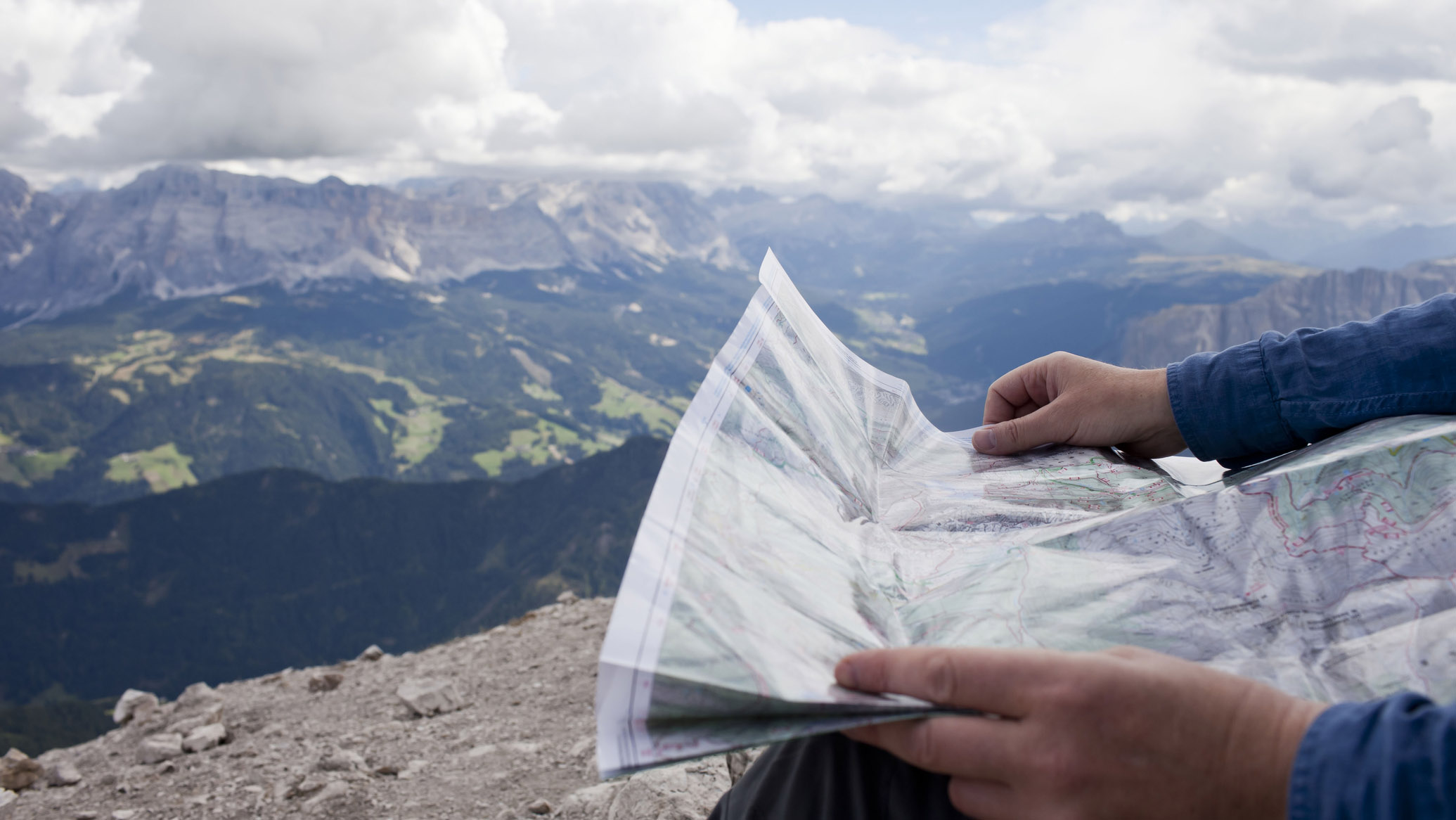
This is because, despite the many innovative solutions that digital mapping has given usa, there's still no real substitute for knowing how to read a map and how to utilise a compass. Developing your navigation skills in plough gives yous an appreciation for the lay of the land and enhances your wilderness survival skills. Put it this mode, learning to utilize a map and compass develops you lot as an adventurer, while a reliance on technology actually deskills you.
Technology is as well fallible. Cold tin wipe your device'due south bombardment out with alarming speed, rendering you lot unable to navigate. Drop or lose your device and you might take the same trouble. Nosotros know what you're thinking, people are fallible also and can make mistakes when pinpointing their current location, for case. That'southward why, when y'all hit the trails in your hiking boots, we'd always recommend you take a map and compass, also as a hiking app or GPS device as a support, simply in case.
How to read a map
Step one: choosing the correct kind of map
For hiking and other outdoor adventures, you will need a proper topographical map, produced by cartographers to a clearly identified scale. Topographical maps bear witness detailed information on the nature of the terrain, roads, footpaths and - crucially - the gradients.
A tourist map may not necessarily be to scale and won't contain all the features you need. Meanwhile, a route map will be to scale but will exist so focussed on man features, such as roads, towns and cities, that it won't give you the information yous require to be able to read the landscape.
Step 2: choosing the right calibration
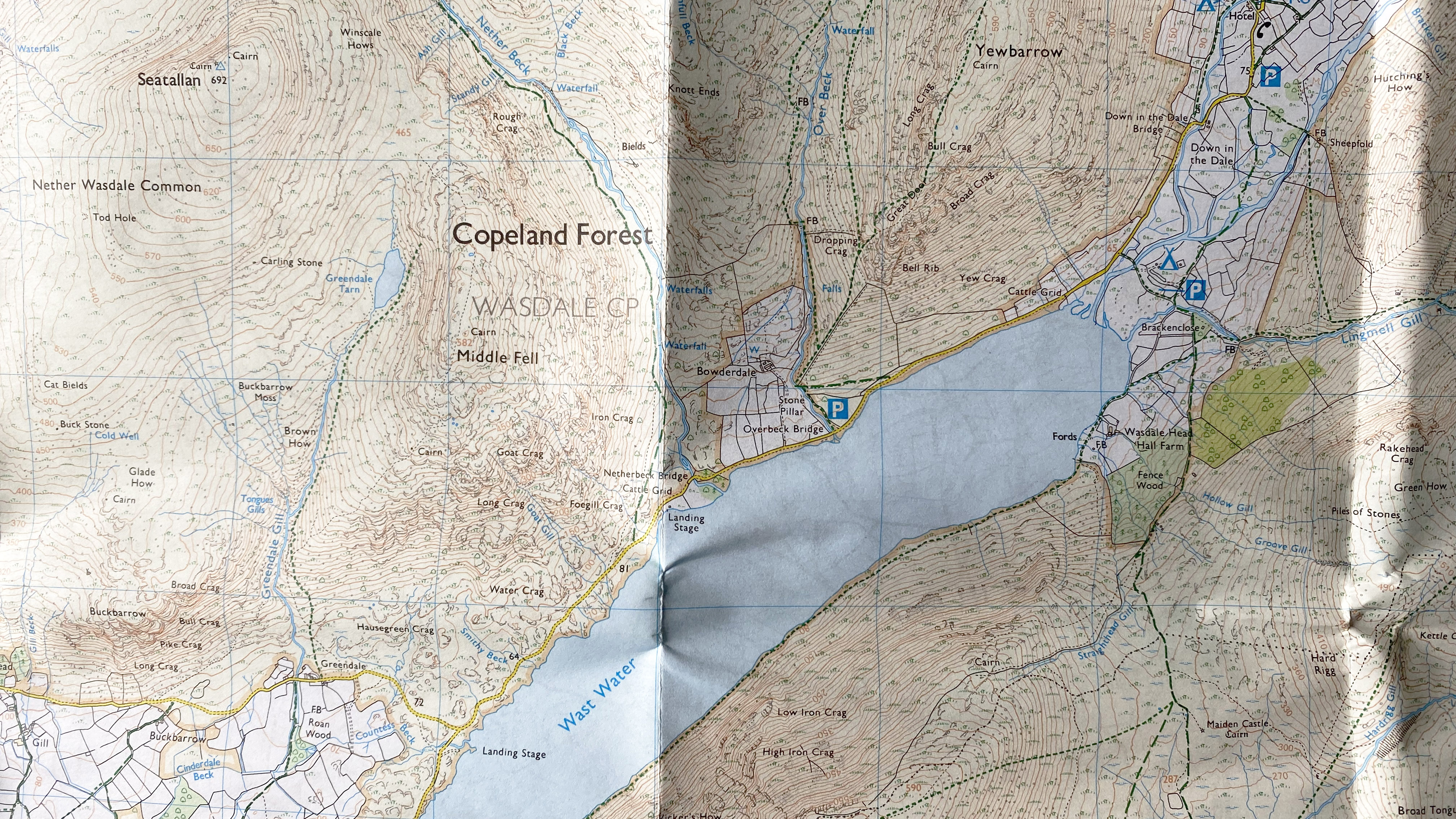
Topographical maps come in a range of scales, such as the excellent ane:25,000 and i:fifty,000 maps produced by Ordnance Survey in United kingdom, or the 1:24,000 maps produced past the United States Geological Survey in America. The larger the scale, the smaller the area that is covered past the map, which is slightly counterintuitive.
And so, a i:25,000 map is a large calibration map and shows a smaller area in more particular and a i:50,000 map is a smaller calibration map and shows a larger area in less detail.
Small scale maps (1:50,000 or 1:40,000)
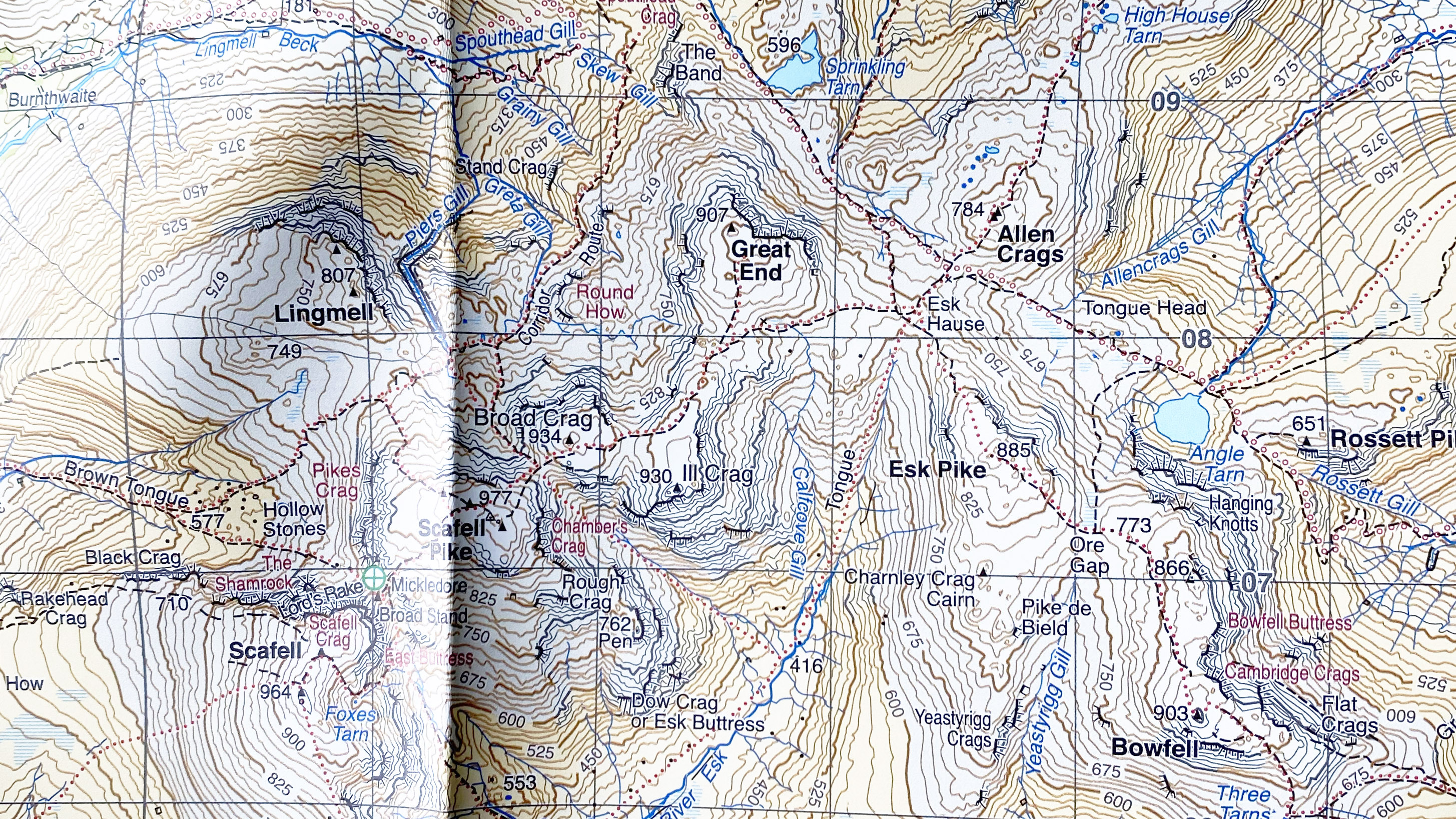
If yous are going to be moving apace across the landscape and roofing a big distance — on a long trail run, for example — the detail offered past a 1:50,000 or ane:40,000 map should be sufficient. The terminal thing you want to be doing is constantly running off the edge of your map sheet. Other times yous might want a larger scale map is on a multi-solar day expedition or when cycling. It's preferable to have everywhere you're expecting to become on one map rather than having to bring two or 3 along.
On a one:50,000 map, 1cm is 50,000cm in real life, so 1cm equals 500 metres, and 2cm is 1,000 metres (1km). If you look closely, you'll notice that a topographical map is divided into grid squares. These squares represent 1km squared, so because on a 1:50,000 map 2cm = 1 km, each filigree square is 2cm X 2cm.
Big scale maps (one:25,000 or 1:24:000)
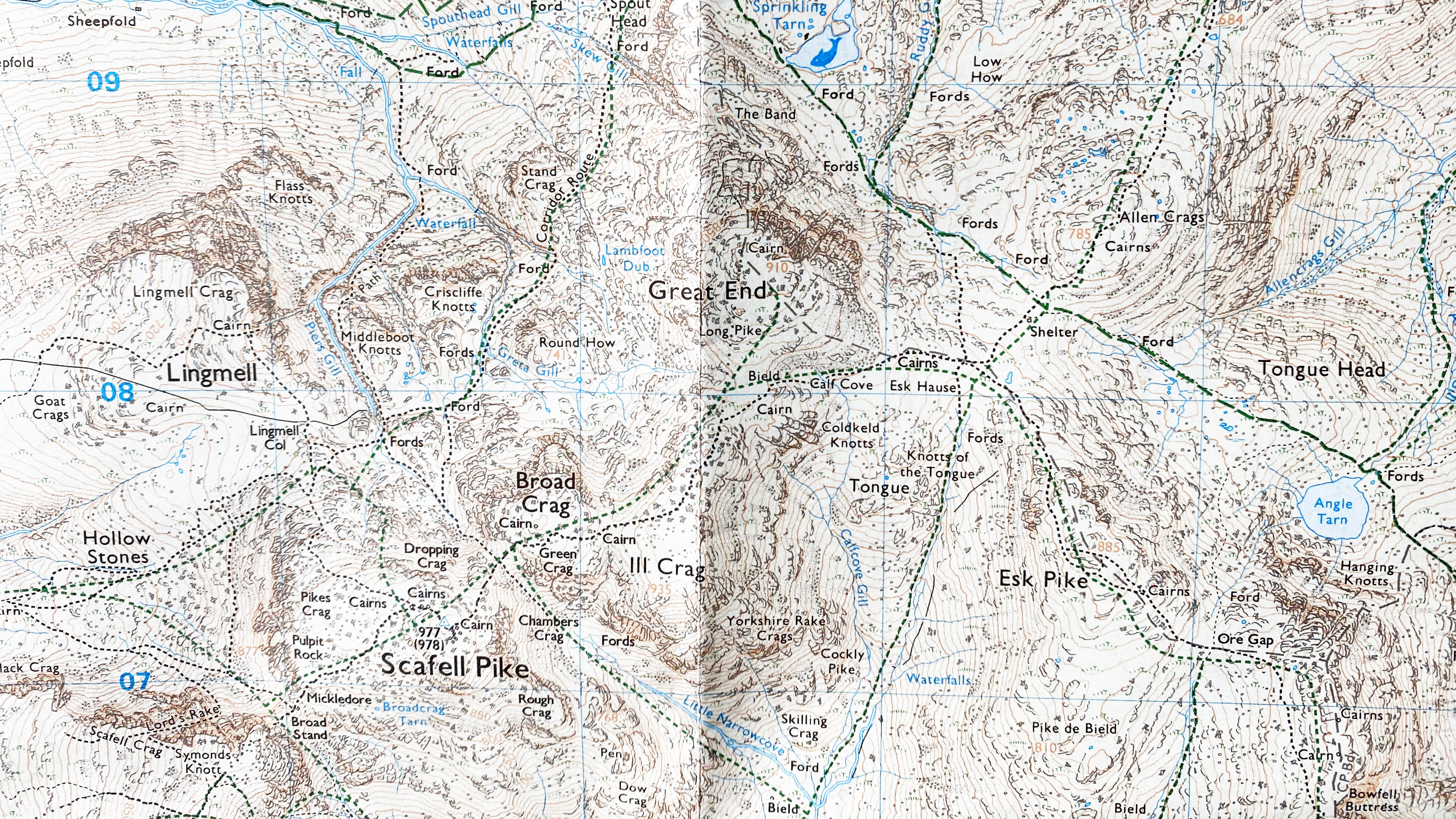
For day hikes and more precise navigation, yous'll want a smaller scale map in your twenty-four hours pack. The level of particular is greater, with more than individual features allowing for a greater degree of accuracy when yous're finding your fashion from A to B. For activities like night walking, y'all will definitely want a smaller scale map.
A 1:25,000 scale ways 1cm on the map equates to 25,000cm on the ground (so 250 meters); therefore 4cm on the map equals 1000 meters (1km). And then, the filigree squares on a i:25,000 map are 4cm X 4cm and represent i km squared.
Step iii: understanding the legend
At first glance, it can be overwhelming trying to work out what the diverse lines and symbols mean, as there is an awful lot of data to take in and you might wonder if you'll ever larn how to read a map. Yet, take a jiff, consult the legend (sometimes called the central) and you lot will discover what the colored icons, symbols and lines correspond.
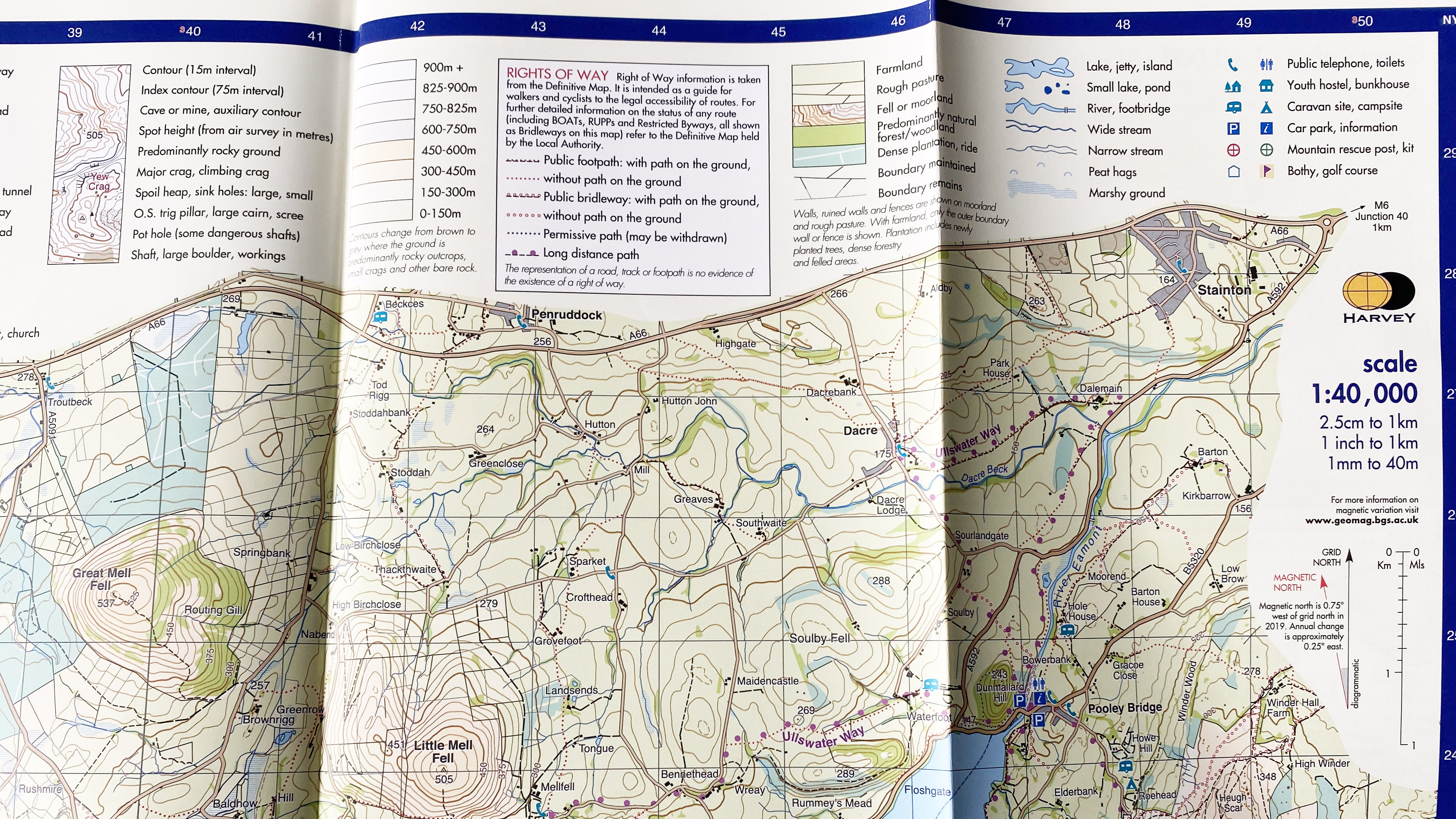
Most maps use symbols and abbreviations, rather than descriptions, to show where things are. This is to avoid the map being crowded with writing, making it harder to read. The key as to how to read a map is exactly that: a central. Also known equally a legend, the key sits in the corner of the map for you to refer to and tells yous what the different symbols mean so that y'all know what yous are looking at. Of form, different map brands in different countries have different colour codes and symbols, so it's expert to familiarise yourself with the brand you are using.
Paths
Arguably most important to many map readers are the lines that bespeak a public right of way or footpath and trails that y'all can both walk and ride (on a horse or a cycle). Remember, though, just considering a path looks clear on a map, it won't necessarily be obvious on the ground, so keep checking your map to see whether you lot're passing the landmarks that indicate you're on the right track. Information technology's worth also bearing in mind that paths may be that are not indicated on your map.
Symbols and abbreviations
Symbols and abbreviations range from the essential – public toilet icons, little tent symbols signifying camping areas, and footbridge icons, denoting where you lot can cross rivers and streams – to the very useful: picnic spots, practiced viewing points and places to eat and drink. Brits oft scour their Os Maps looking for PH, which ways Public House (pub), for when they want to know where the nearest place is to get a beer!
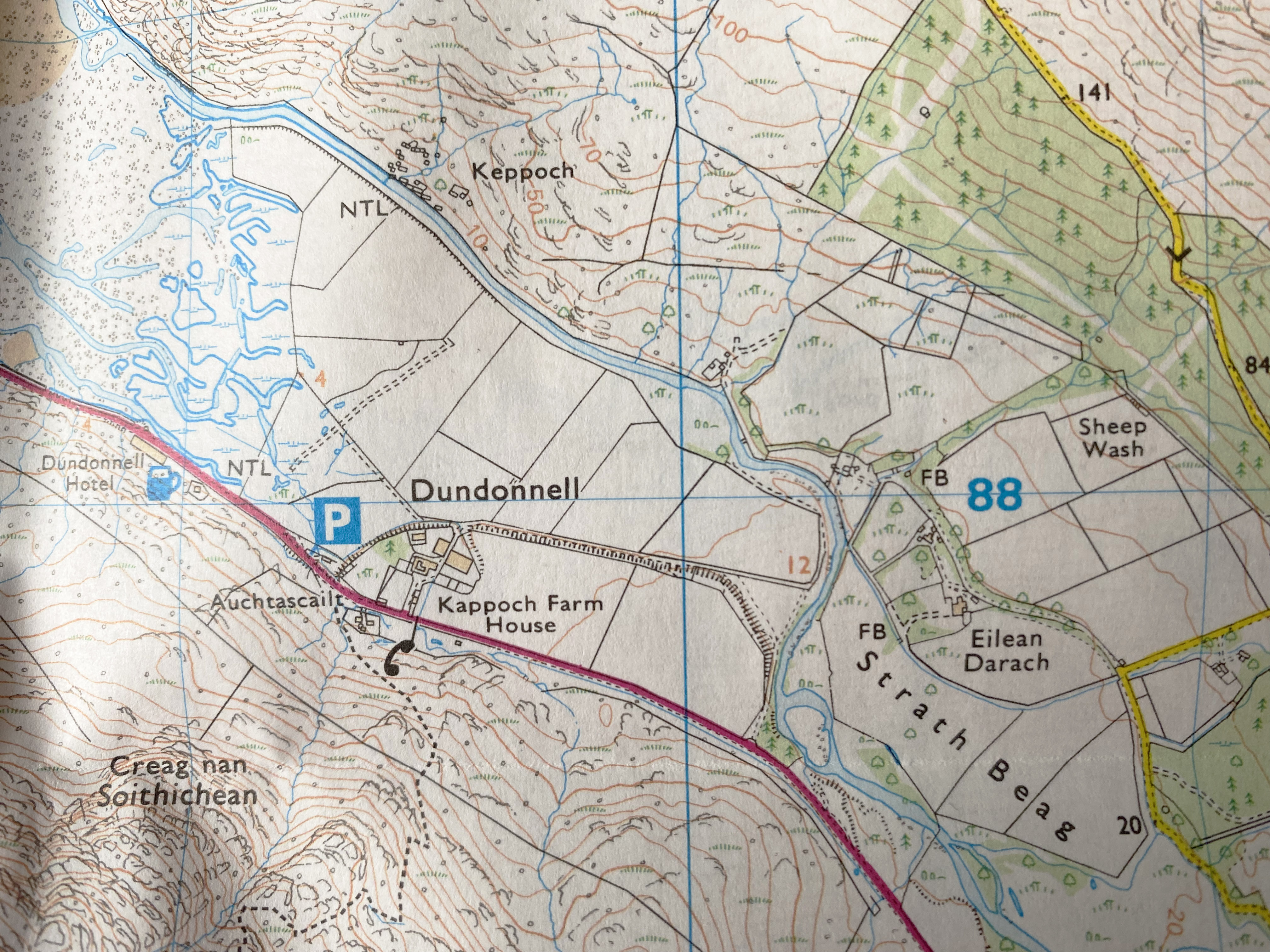
Besides, knowing the difference between diverse symbols can exist really helpful when navigating through different types of terrain, such every bit unlike varieties of woodland. Pino plantations may be represented by icons looking somewhat Christmassy, whilst mixed woodland might exist represented past a bushier, broccoli-esque icon. Once yous know these details, you tin can often piece of work out if you lot are where y'all retrieve you are by the flora around you.
Step 4: understanding contour lines
Contour lines are squiggly lines, with numbers next to them. The lines represent the contours (shape) of the land, and the numbers tell you the elevation each line is in a higher place sea level. The closer together the profile lines are, the steeper the slope. If a contour line is pointing in a 'v' shape and they expect close together, this will suggest a narrow slope that is steep, also known equally a spur. The inverse of this (a clump of lines in a roof, or 'n' shape) might signify a decrease in the height – often water features are found hither, due to the slope attribute. These are known as re-entrants.
Whether you're a basic loma navigator or a seasoned pro, contours are incredibly useful when planning a route, as you tin can get a skillful pic of how steep information technology will be and set up accordingly. The country's contours are the well-nigh fixed attribute of a landscape. Copse can be cut down, new paths can exist congenital and onetime ones become overgrown, walls tin can be dismantled and streams can change course. What this ways is, contours are the most reliable features on your map and the first matter you should use to determine where you are (more on that later).
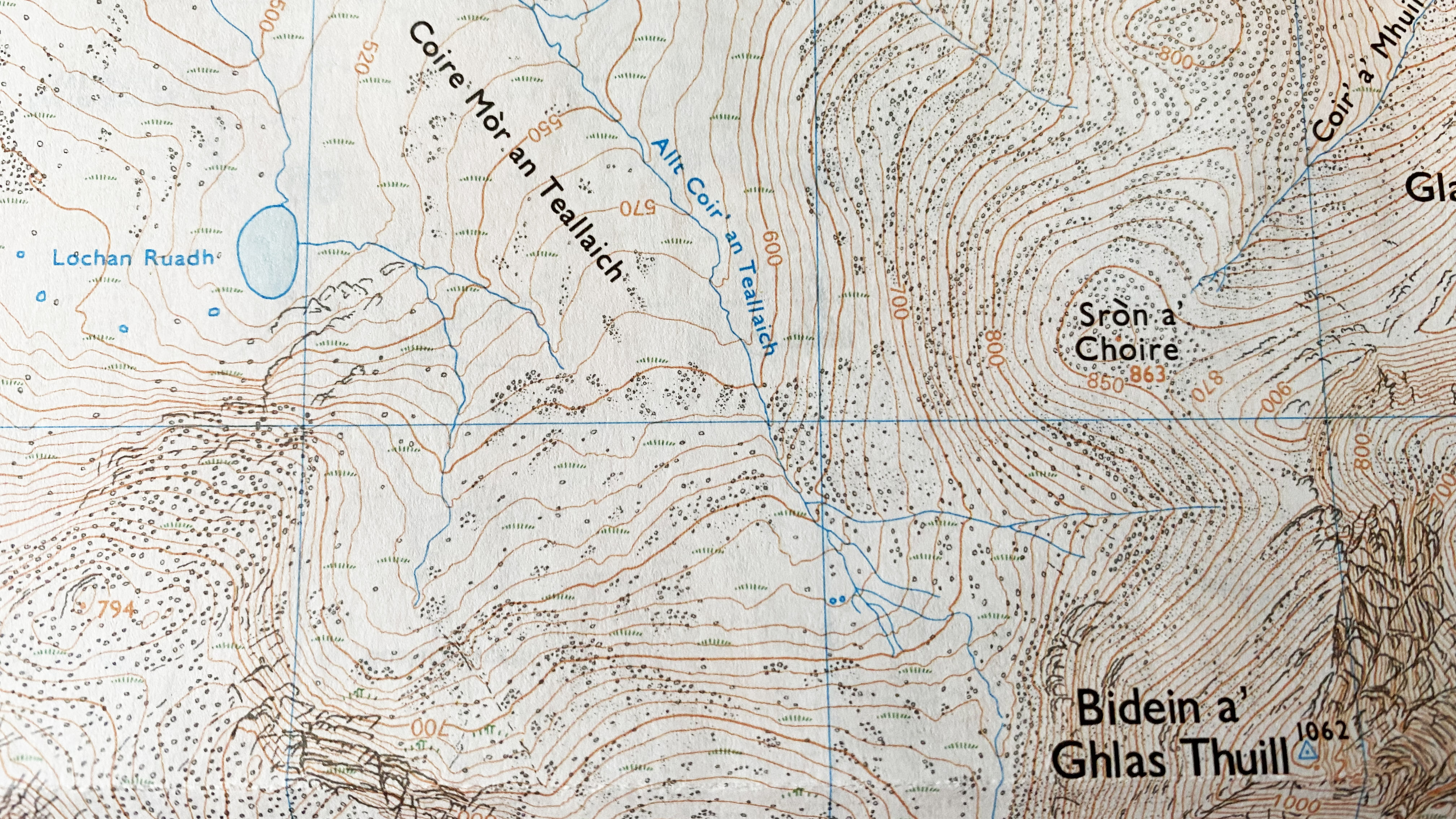
If you are in a relatively apartment area and see a clump of orangish profile lines ahead, you know to await some steep hills that crave a tough rise. Seeing spaced out contour lines indicates flatter country, which can as well help you program where you are going to pitch your ane-person tent for the night.
On about maps, the interval between contours is commonly 5 meters, but in mountainous regions, it may be 10 meters. This can exist checked against the fable. Contours tin speedily reveal if the expanse planned will require a longer time to walk around. Equally a rule of thumb, for every 10 meters of pinnacle climbed, it's worth adding on an additional minute of expected walking fourth dimension.
For a curt snippet of history on the origins of contour lines, take a look towards the stop of this guide.
Pace 5: Relating the map and the land to each other
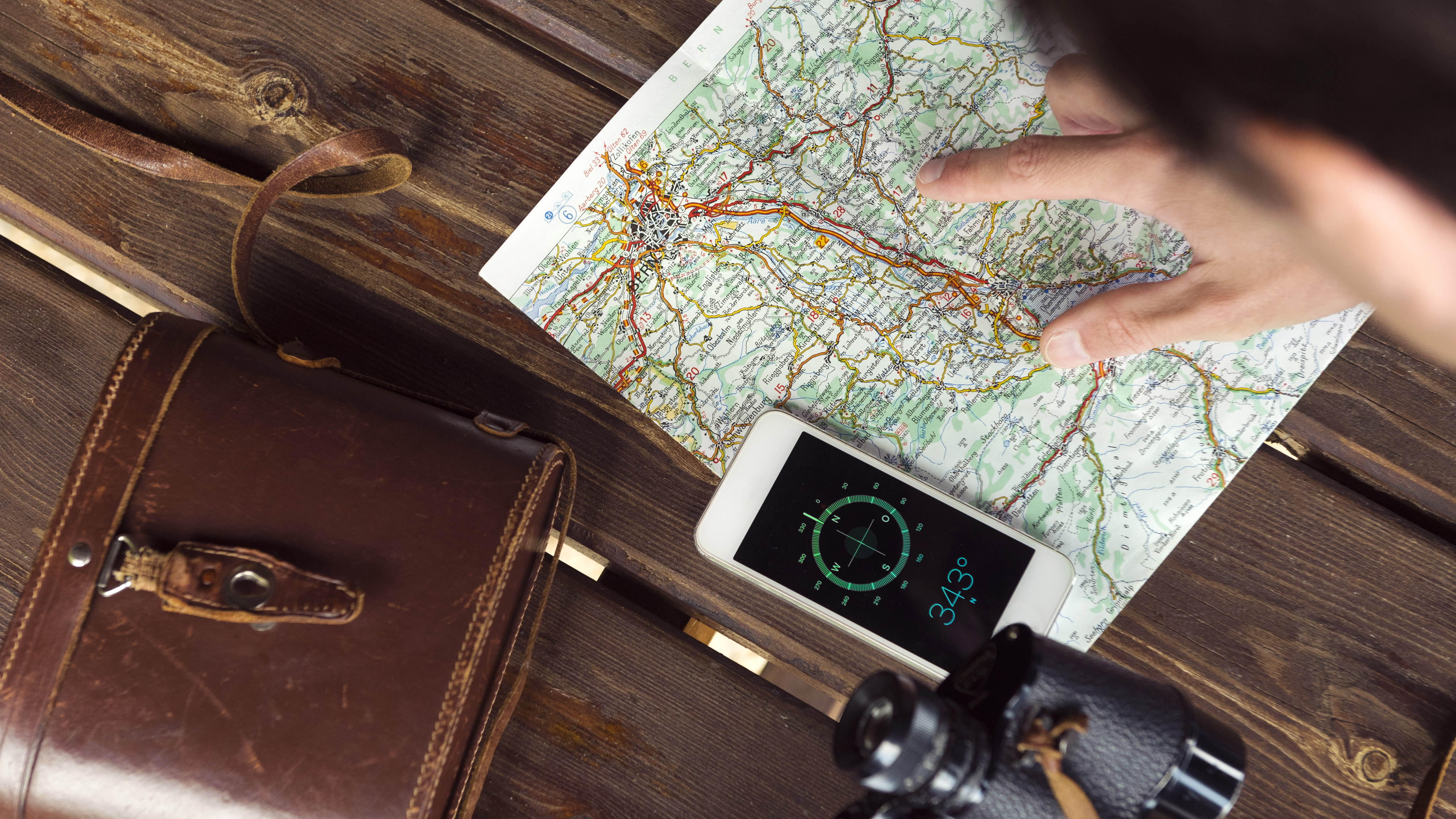
Figuring out where you lot are on a map is the bread and butter of navigation and this is where people can go wrong and end up in the wrong valley. Information technology'southward a bit like existence a detective, using the clues that the land gives you lot to pinpoint where you are on the map. The temptation is to rush here, merely it's much improve to exist absolutely sure of your location past using as many clues every bit yous tin.
Use the contours
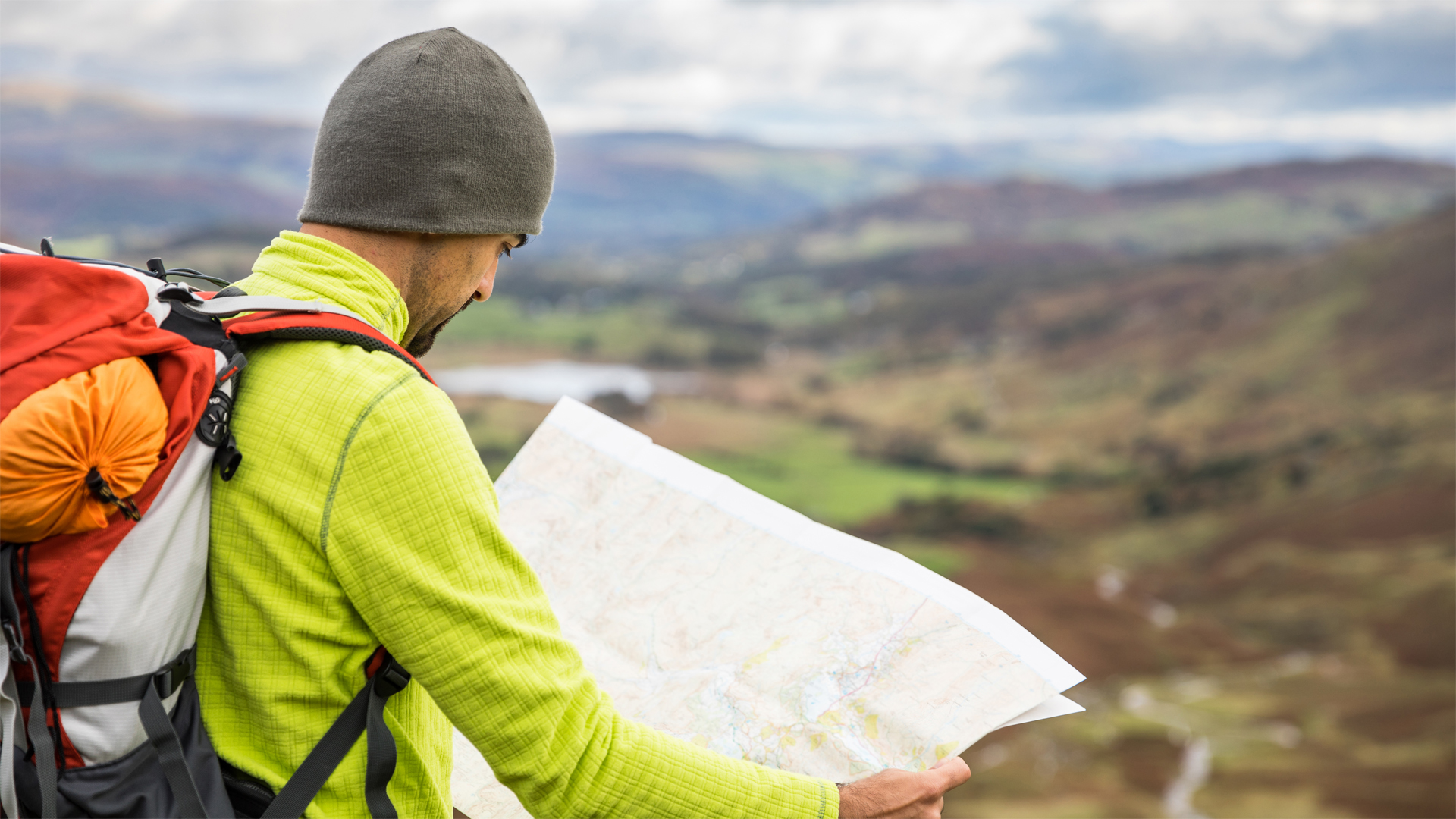
To begin, accept a adept expect around and read the country as much as y'all can, before even looking at your map. As previously mentioned, contours are the near fixed attribute of the mural and this is the first affair you should look for. What is the land doing around y'all? Are you on a steep slope or a flat plateau? What is the land doing ahead of you? Behind you? To your right? To your left? Now, meet if you can friction match these up to the contour lines on your map.
Look for natural features
Okay, you lot've got a sense of what the shape of the land is doing in terms of contours. Adjacent, yous tin can get-go to look for other natural features. Are there any obvious natural features visible? Crags, Streams, lakes, waterfalls and forested areas are all good things to look for next and then compare them to the map one time again.
Look for human features
Human features like buildings, paths, walls and fences are the last matter y'all should use, as they are more liable to change. Notwithstanding, now yous should exist getting fairly confident of where yous are based on the natural features around you, so you can use the human features to complement these. Like a detective, you will have gathered all of your clues and virtually exist set up to reveal to your friends that yous are a master of deduction, pinpointing exactly where you are on the map...
Use your approximate pinnacle
One last fob is using the approximate elevation of features effectually you to solidify your sentence of where you are on the map. If yous can see that you lot are broadly level with an side by side elevation or ridge line, y'all can use the contour lines on your map to work out how loftier you are and compare this to the elevation of your perceived location on the map.
Step 6: Orientate your map
Once you're confident you lot know where y'all are, you can set (or orientate) your map using features around you lot. It's a flake like imagining you are jumping into your map. It involves getting the map to face the same mode as y'all are past looking down it from your perceived location so that features that are ahead of you line up with their representation on the map.
For example, if at that place's a prominent summit ahead of y'all, you tin agree your map in front end of you so that y'all are facing the summit physically and on the map likewise. So you tin can check other features on either side to check that they match up.
Other aspects to consider
Used correctly, a map tin allow you lot to accurately plan a journey, giving a good idea of landmarks and features you will pass along the route, as well as how far you will exist traveling. Adding compass skills will bring actress value to your map too.
It is always worth owning a map if you are likely to be returning to an area over and over again – at that place's nothing more heady than pouring over a paper map in the condolement of your own home, planning a new adventure. Generally, yous tin can get hold of individual maps that cover particular areas. National Parks and popular hiking regions are usually extremely well catered for.
Of grade, paper maps practice eventually become dated, with new roads existence congenital or areas suffering erosion and footpaths falling into the sea. Digital mapping software allows y'all to print up-to-date maps to calibration and brand multiple copies, which is useful for hillwalkers who want flexibility with their plans. The main mapmakers mentioned above all have digital platforms and they rank among the best navigational apps available.
The history of contour lines
Understanding how to read a map when you're in the mountains has a lot to do with profile lines.
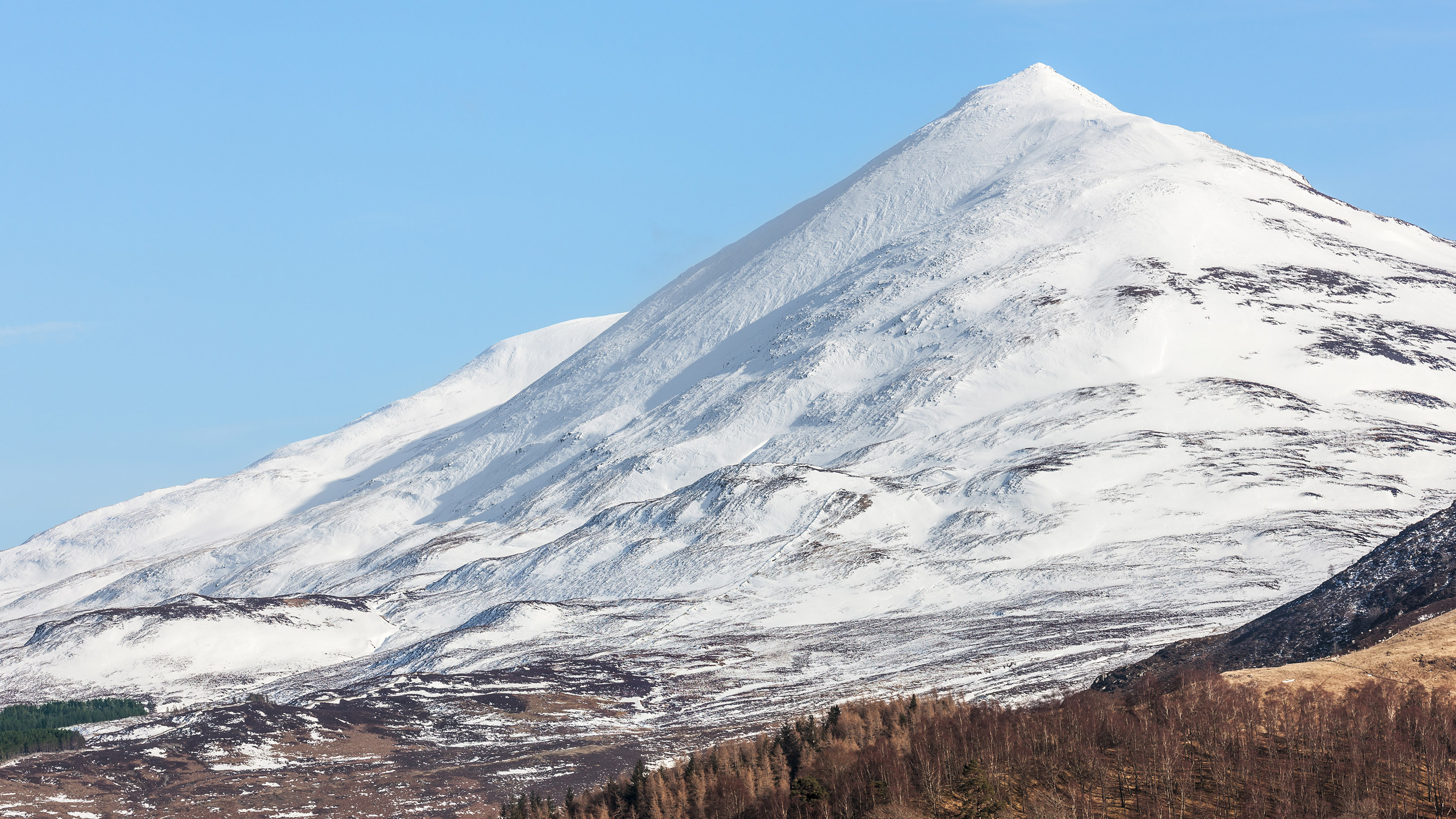
Here'due south a bit of history for you lot. In 1774, a Scottish mountain called Schiehallion was the subject of a ground-breaking experiment to determine the mass of the Earth by Astronomer Royal, Nevil Maskelyne. This was due to its almost symmetrical shape and isolation. The experiment was based around the hypothesis that Schiehallion's known mass would take an observable gravitational attraction on objects and that this phenomena could be measured. The information was so used, incredibly, to calculate the mass of the Earth for the first fourth dimension. The calculation, although not perfect, was pretty accurate.
Maskelyne gave the job of calculating Schiehallion'south mass to a man named Charles Hutton. Hutton did this by triangulating its height at various points across the mount's surface area and joining the dots. The outcome of this study was the nascency of profile lines.
Grid references
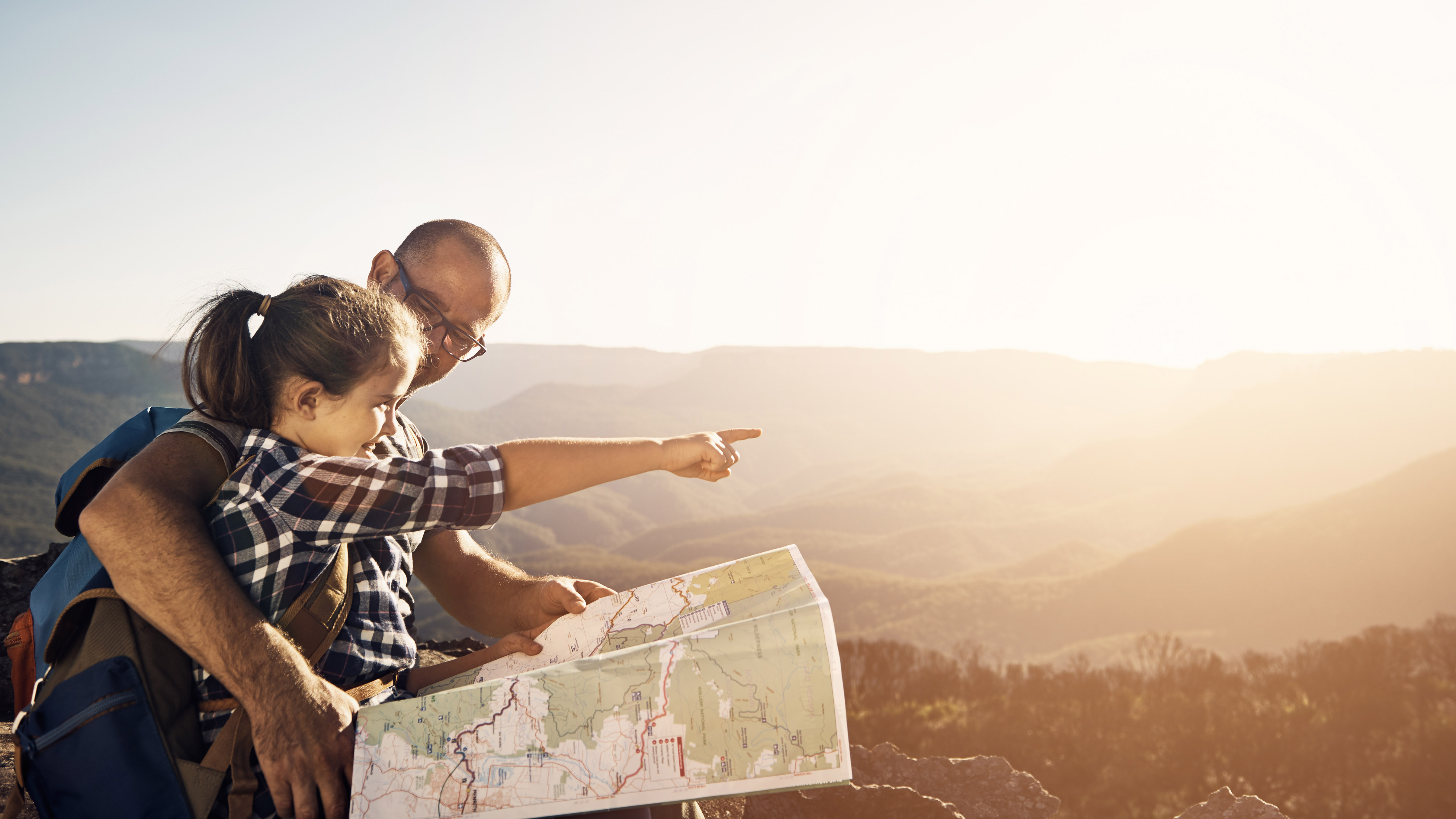
Equally a kid at school, you'll have learnt all well-nigh co-ordinates and grid references, finding treasure on treasure maps or playing Battleships. In fact, you'll find that kids love maps. Teaching them your map reading skills is a great way to get them involved and proceed them entertained on your family hike...
Any map you'll employ in the outdoors is covered in faint lines, which make upward a grid. Each grid square will measure a set area, and they take associated numbers, running horizontally and vertically forth the edges of the map. These numbers are what you lot utilise to pinpoint your location on a map. This is useful for giving people directions to a remote camp spot, for case, or in an emergency to relay your location to mountain rescue.
To accept a grid reference, remember the useful phrase: 'forth the corridor and upwards the stairs'. The first numbers you lot quote are the ones that run along the bottom of the map, from left to right – the 'Eastings'. The 2nd block of numbers you should quote are the ones read from bottom to tiptop, known equally 'Northings'.
Four-effigy filigree references identify a unmarried square on a map, and six-effigy grid references (when you apply the smaller incremental 1-10 markings betwixt the numbers) place a smaller square, which should be sufficient for anyone to locate the spot you're talking about.
Latitude and longitude
Latitude and longitude are global addresses, written in numbers so that everyone can apply them regardless of where they are. These are the numbers y'all see when you click on 'Your Location' on Google maps, and they requite a very accurate reference point to where you are. They are given equally coordinates, made from horizontal lines, with the equator referring to 0 breadth, and vertical lines, with the line passing through the prime peak referring to 0 longitude. It's worth noting that some international maps don't use grid references, but use latitude and longitude only.
Carrying a dorsum-up
Finally, for those who wish to main the fine art of becoming a navigation pro, get practising and remember to carry a spare form of navigation in case ane fails – for those in mountainous regions it's worth conveying a spare map and compass divide to your main tools.
If you are besides using digital mapping on your phone, it's a practiced idea to bring a portable charger or a solar charger, so that if your battery dies, you can charge it support. Just don't forget the cablevision!
Hiking in U.k.: should you use Ordnance Survey or Harvey?
The two mainstays for hikers in United kingdom are Ordnance Survey (OS) and Harvey.
Ordnance Survey are the national mapping agency of Great Great britain and are very much pioneers in the field. It was Ordnance Survey who built triangulation pillars on high ground across the nation. This was in order to calculate the height of the land at various points. Their Explorer serial is immensely popular with those heading into the British countryside. The usual scale for Os Maps are 1:25,000 and i:50,000, though larger calibration maps are available.
Withal, Bone Maps are designed for general apply. A popular alternative to Ordnance Survey is Harvey, which are designed specifically with hikers and mountaineers in heed. They are waterproof as standard and show the intricacies of terrain in more than detail than OS Maps. Maps are available at 1:25,000, 1:30,000 and 1:forty,000 calibration.
And then if yous're off to do the all-time walks in the Lake District, an Os map should adapt yous only fine. However, if you are traversing more than technical ground, similar the rocky terrain of the Isle of Skye'due south Cuillin Munros, and so Harvey could be the all-time bet.
Common map reading mistakes
Hidden or indistinct footpaths
Most maps will prove when the footpath or right of fashion changes. If the green dotted line of a sudden appears on i side of a solid black line before switching to the other side, this might hateful there is a wall that needs to be crossed, which will either accept some kind of signpost or minor steps built-in. When walking beyond areas with multiple paths, proceed rail of which path y'all are walking on. For more on this, meet types of hiking trails.
Confusing boundary lines, paths and footpaths
People can oftentimes misinterpret a purlieus line for a path or footpath or vice versa when looking at a map. Boundary lines are sometimes old drystone walls, or disused fences, or may not exist at all. It's of import to recognize what this looks like so you don't end up looking for a footpath that doesn't exist when out on a walk. Check the map legend carefully
Walking while property your compass
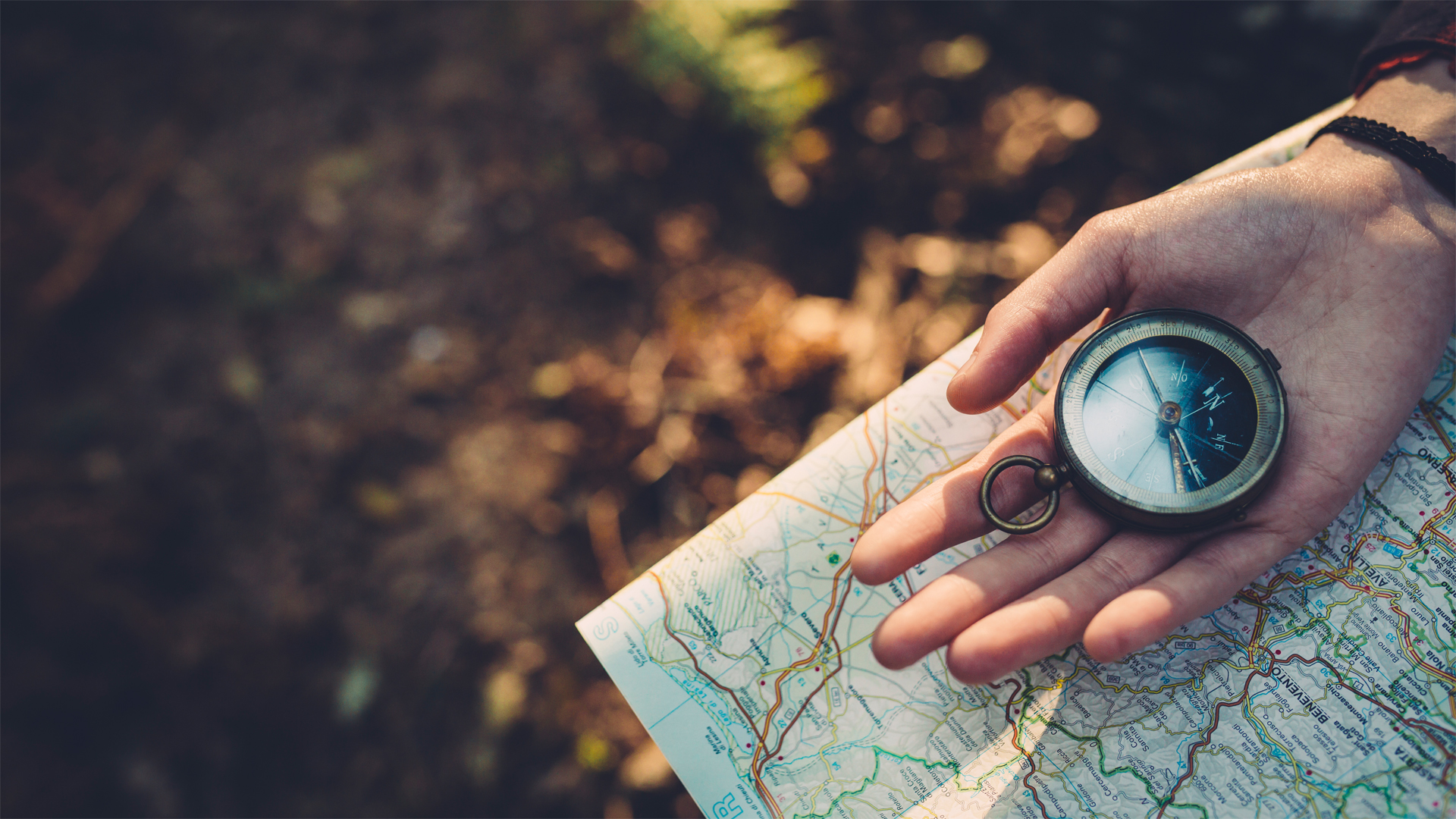
Walking a few paces sideways can throw your compass off course, even though you are still walking in the correct direction. Magnetic interference from mobile phones and electronics tin can also bear on the signal. Also walking whilst holding a compass tin can distract y'all from looking out for danger. It's best to line your compass upwards with something in the distance and head towards that.
Selecting a moving object to walk towards
It'southward best to be walking towards something in the altitude that is not probable to move, such as a distinctive rocky outcrop, a trig point, a meaning peak or church spire. In poor visibility, it is easy to mistake a sheep for a rock!
Not taking magnetic variation into account
Make sure you bank check for magnetic variation in the area you're exploring and have it into account when lining up your compass. The magnetic variation will exist printed on the map. In fact, a region's geology can affect your compass needle. The gabbro rock of the Isle of Skye in Scotland is notorious for throwing your compass completely out.
Not trusting your compass
If you think your compass is pointing yous in the incorrect direction, so start again to piece of work out your direction. Check the compass hasn't go de-magnetized, which is normally when a compass has been exposed to a battery or a torch. If it says the same direction once more, and so trust it – usually, it is right, and your sense of direction is wrong.
Top tip
Make certain you look after your maps by putting them in a clear map case, which helps prolong their lifespan and readability. Bone Explorer maps are simple paper maps that can be cost-effective, while OS Agile maps are slightly more expensive, plastic-coated maps that are water-resistant and tin can be much tougher and longer-lasting. Harvey maps are also water-resistant and are very lightweight.
Source: https://www.advnture.com/how-to/how-to-read-a-map

Post a Comment for "Learn How to Read a Map Backpacking"